The Beauty Industry Is Changing: But Are We Listening to What Clients Actually Want?
Consumers are becoming more resourceful. Is the beauty industry keeping up?
During a recent bridal trial, I had a client take a photo of herself prior to our appointment and upload it to ChatGPT. She asked Chat, “What would look best on me?”
What interested me the most was the answer.
ChatGPT gave her a recommendation that was actually the same recommendation I was going to make for her.
That moment made me think about how much the beauty consumer has changed. Technology did not replace the advice of a beauty professional, it gave the client another way to explore an answer she was already going to receive.
Consumers are becoming more resourceful when it comes to beauty. They are researching, always comparing, asking questions, and finding their own answers. The way they shop is changing, and our approach to marketing needs to account for that change.
Consumers are finding alternatives
Beauty brands have always introduced new products and created excitement about them. But consumers today have more ways to decide whether they actually need what is being offered.
A product may become popular and then disappear from a brand’s lineup a short time later. In the past, a consumer might have just moved on. Today, she can search for a dupe, compare similar products, or use AI to find an alternative.
This is so meaningful.
Consumers are becoming smarter about finding products that fit their needs and their budgets. They are learning that the most popular or recognizable product is not always the only option.
They are not just responding to beauty marketing, they are participating in the process.
Brands are listening. But what are they hearing?
I do think beauty brands are becoming more consumer-focused.
Brands are watching creators and influencers. They are paying attention to what people are talking about, which products are being recommended, and what is getting attention online. That information can help brands understand what consumers are interested in.
But there is a difference between seeing what is popular and understanding what a consumer is actually trying to solve.
A creator may make a product visible. A viral product may create demand. But consumers are also asking different questions.
Is there a more affordable option? What can replace a product that was discontinued? Is there something similar that will give me the result I am looking for?
Those questions may not always show up in a campaign’s engagement numbers, but they tell us something about what consumers need.
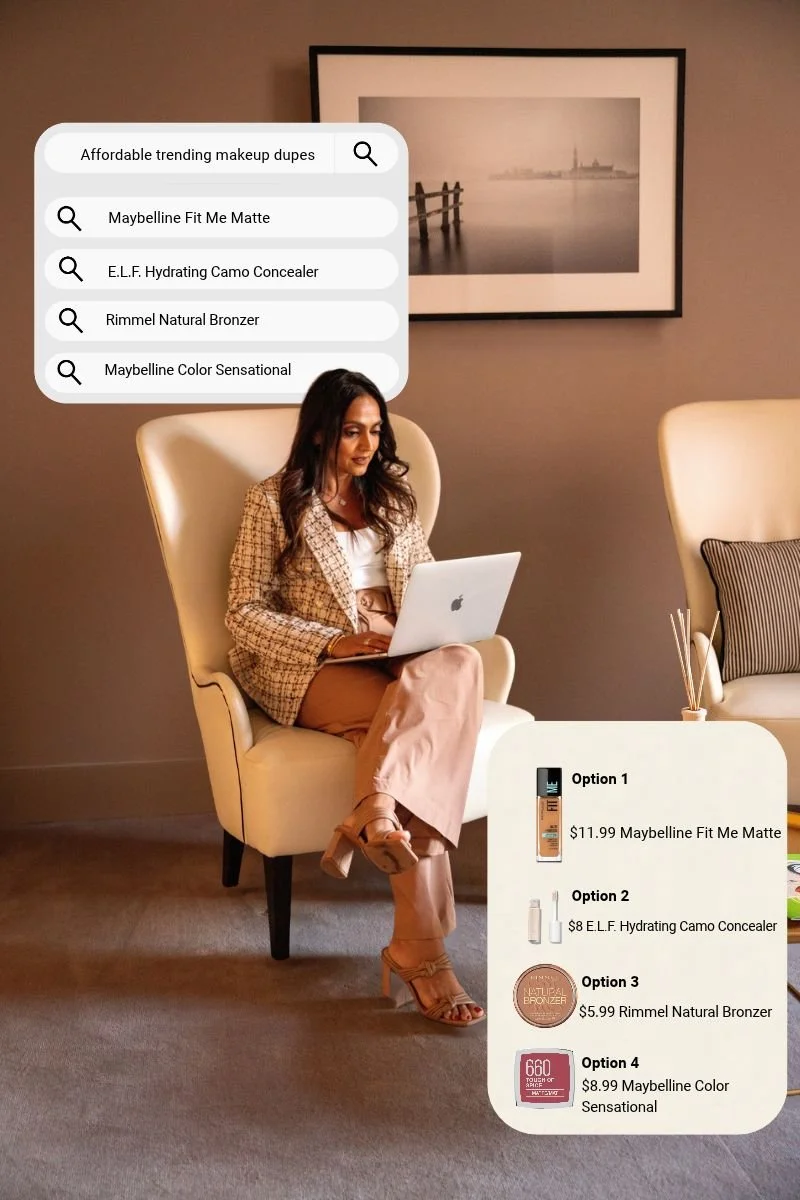
Image created in Canva with products influenced from BeautyMarkedFL.com
The consumer has more tools than ever
The beauty industry is no longer the only source of information.
Consumers can watch creators demonstrate a product, read reviews, compare prices, and ask AI to help find them alternatives. They can learn from other people’s experiences before they ever make a purchase.
That does not mean technology replaces beauty professionals or creators. My bridal trial experience showed me something different.
Technology can give a consumer another way to ask questions, while professional experience can provide context that technology may not have.
The consumer now has access to both.
That changes the role of beauty marketing. We cannot assume that consumers are waiting for us to tell them what to buy. They are already researching, comparing, and making decisions for themselves.
What are clients actually asking for?
Maybe the better question for the beauty industry is not, “What product do we want to sell next?”
It is, “What is the client trying to solve?”
Sometimes she wants a new product. Sometimes she wants a more affordable alternative. Sometimes she wants to replace something that is no longer available. And sometimes, like my bridal client, she wants to know what she should do next.
Those are different needs.
The brands that pay attention to those needs will have an opportunity to create more useful experiences for their customers. That means listening not only to what people are buying, but also to the questions they are asking and the workarounds they are finding on their own.
The industry needs to change with the consumer
Consumers are becoming more informed and more resourceful. Technology is making it easier for them to compare, question, and find alternatives.
Beauty brands are already paying attention to creators and consumer conversations. The next step is to listen even more closely to what those conversations are telling us.
The future of beauty marketing may not be about giving consumers more products to choose from.
It may be about understanding what they are already tyring to accomplish—and helping them get there.
The beauty consumer has changed.
The question is now whether the industry is ready to change with her.
Barbie Patel is a beauty entrepreneur, makeup artist, and founder of Cinderella Bridez and Beauty CEO University. She writes about the intersection of beauty creators, business, and technology.